
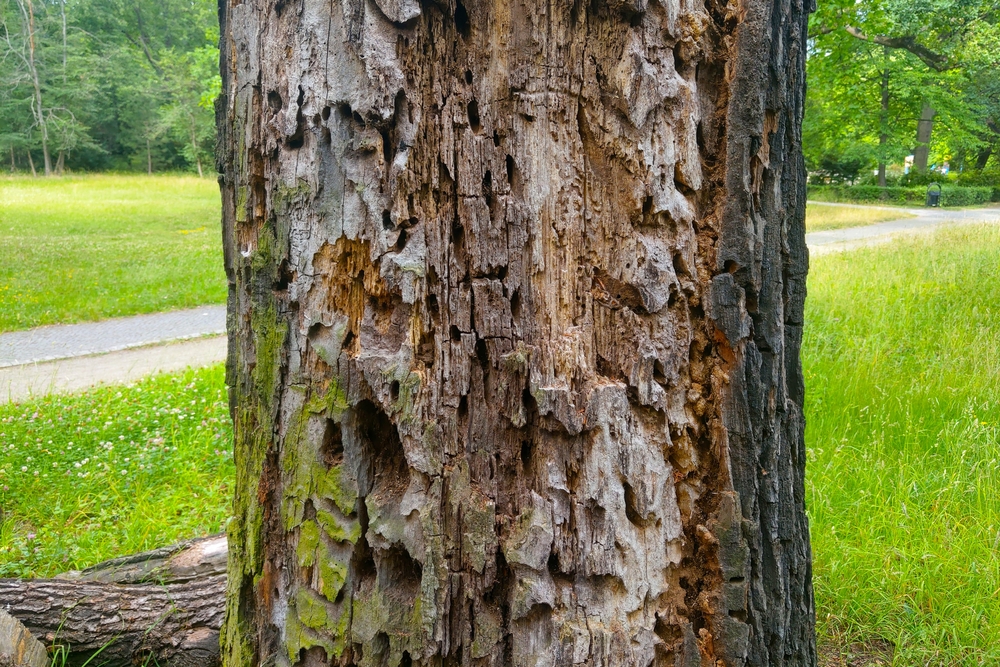
Property owners are used to seeing trees change throughout the seasons, but most of these changes occur within the tree’s canopy. This is why noticeable changes in bark color can often come as a surprise.
Should you be concerned if your tree’s bark has started to change color? While some bark changes are completely normal, others may indicate environmental stress, disease, pest activity, or other underlying concerns. Unfortunately, it can be difficult to determine whether a tree’s changing bark is simply a natural part of its growth cycle or a sign of a problem that requires attention.
The good news is that help from a certified arborist is just a call away. At Blue Pine Works LLC, we help identify the cause of unusual tree changes and provide expert care to promote long-term tree health. Below, we will explore some of the most common reasons tree bark changes color and when it may be time to seek expert tree care.
Why Tree Bark Naturally Changes Over Time
Changes Due to Age
Just like human skin, a tree’s bark alters its appearance as it ages. Young trees often have smoother bark that appears lighter in color than the bark they develop later in life. As the tree becomes older, its bark may become darker, rougher, thicker, or more textured. Some species even shed their outer bark layers, revealing fresh bark underneath that may look dramatically different in color.
Changes Due to Seasons
Seasonal changes can also influence how bark appears. During wet weather, bark may look darker because it absorbs moisture. During dry periods, it may appear lighter or more faded. If part of the tree is exposed to direct sunlight for an extended period of time, that side of the bark may develop a lighter hue than the rest of the trunk.
Changes Due to the Unique Characteristics of Different Species
Finally, it’s important to note that different tree species are known for unique bark characteristics. Take the Paper Birch or the River Birch, for example; as these trees mature, their outer bark naturally peels away in paper-thin curls, revealing stunning shades of creamy white, soft salmon, and delicate pink underneath. Similarly, Sycamore and London Plane trees naturally shed large, plate-like patches of older bark to make room for new growth. This process exposes a beautiful, puzzle-like camouflage pattern of whites, tans, pale yellows, and olive greens along the trunk.
Because bark changes can vary significantly from one species to another, understanding what is normal for a particular tree is often the first step in determining whether a change is cause for concern.
Environmental Factors That Can Affect Bark Color
Trees are constantly at the mercy of their environment, and the elements can leave a lasting impression on their bark.
Some of the top environmental factors that affect tree bark color include:
- Sunscald: This occurs when bark experiences rapid temperature fluctuations, particularly during winter months. Trees exposed to intense sunlight during the day can experience damage when temperatures drop sharply at night. Sunscald may cause bark to become discolored, cracked, or damaged, particularly on the south or southwest side of the trunk.
- Drought Stress: When trees struggle to access adequate moisture, they may experience reduced vigor, which can lead to bark that appears faded, dull, or unusually dry.
- Excess Moisture: Poor drainage, flooding, or prolonged wet conditions may encourage fungal growth on bark surfaces. Moss, algae, and lichen can sometimes create green, gray, yellow, or black discoloration.
- Additional Stressors: Soil compaction, construction activity, and root damage may also stress trees and contribute to changes in bark appearance. They can also make the tree more vulnerable to secondary issues, such as disease and insect infestations.
Diseases and Pests That May Cause Bark Discoloration
In some situations, bark discoloration serves as an early warning sign of disease or pest activity.
Fungal Diseases
Fungal diseases are among the most common culprits. Certain fungal infections can create dark patches, cankers, streaking, or unusual coloration on the bark. As the disease progresses, affected areas may crack, peel, or begin to decay.
Cankers
Canker diseases are particularly concerning because they damage the living tissue beneath the bark. These infections often appear as sunken, discolored areas and may eventually girdle branches or portions of the trunk.
Insects
Bark beetles, emerald ash borers, and other wood-boring pests frequently tunnel beneath the bark, disrupting the tree’s ability to transport water and nutrients. Their activity may result in staining, small holes in the bark, peeling or flaking bark, oozing sap, or patches of dead bark.
Prompt diagnosis is important because many tree diseases and insect problems become more difficult to manage once they have progressed extensively. If you suspect your tree has a pest infestation, reach out to our team for a tree care consultation.
Signs That a Bark Color Change Could Indicate a Serious Problem
How do you know when a tree’s changing bark is cause for concern? While a shift in color alone may not be an emergency, when it is paired with structural breakdown, it is time to call in the professionals.
Keep an eye out for the following critical red flags:
- Deep, Penetrating Cracks: Splits that extend deep past the outer bark and into the structural wood of the trunk, often accompanied by dark discoloration or inner wood decay.
- Large-Scale Bark Loss: Bark falling off the tree in massive sheets or chunks without healthy, fresh bark forming underneath, leaving the bare wood completely exposed to elements and parasites.
- Oozing or Bleeding: Any active weeping of thick sap, slimy liquids, or frothy fluids from discolored areas, which frequently points to active cankers or severe pest boring.
- Fungal Fruiting Bodies: The appearance of mushrooms, shelf-like brackets, or conks sprouting directly out of the discolored bark or the base of the trunk, indicating extensive internal rot.
- Canopy Coincidence: Bark discoloration that perfectly aligns with a decline in the canopy, such as premature leaf drop, dieback of major branches, or yellowing leaves.
Trust the Experts to Protect Your Trees
Understanding the reason behind bark discoloration is essential for protecting the health, safety, and beauty of your trees. At Blue Pine Works LLC, our team is dedicated to helping homeowners and property owners accurately diagnose tree issues and implement effective solutions that support the tree for generations to come.
If you live in the Pine City, MN, area and have concerns about changes in your trees, contact our certified arborists today. We’ll deliver the best plant health care so that you can have peace of mind.