
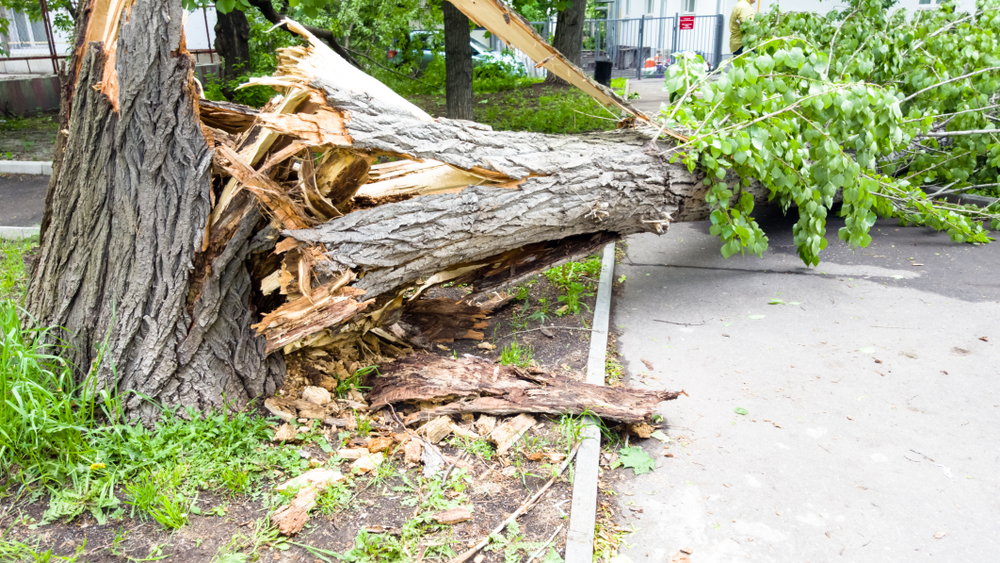
You step outside after a powerful storm passes through your neighborhood. The wind has finally calmed, the rain has stopped, and you expect to see nothing more than scattered leaves and small branches across your yard. Instead, your stomach drops. A large tree is lying across your driveway. Or worse, it’s resting against your home, fence, or garage.
In moments like this, it’s completely normal to feel overwhelmed. A fallen tree can cause significant property damage, block access to your home, and create immediate safety concerns. On top of that, you’re suddenly faced with questions about insurance coverage, cleanup costs, and what to do next.
The good news is that taking the right steps can help protect your family, minimize additional damage, and make the insurance claims process smoother. Below, we’ll walk you through exactly what to do if a tree falls on your property.
Step 1: Prioritize Your Safety
Before you think about cleanup or insurance paperwork, focus on safety.
A fallen tree can be far more dangerous than it appears. Even if the storm has passed, hidden hazards may remain. Limbs can be under extreme tension, trunks can shift unexpectedly, and damaged structures may not be stable.
Here’s what to do immediately:
Keep a Safe Distance
Do not approach the fallen tree until you’ve assessed the situation from afar. If it has landed on your home, avoid entering affected rooms. Structural damage may not be obvious at first glance.
Watch for Downed Power Lines
If the tree has brought down power lines or is resting on electrical wires, stay far away and call your local utility company immediately. Never attempt to move branches or debris near live wires.
Protect Family and Neighbors
Keep children and pets indoors and away from the area. If the tree blocks a shared space or road, notify neighbors so they can avoid potential danger.
Avoid DIY Removal Attempts
Even smaller trees can shift or roll unexpectedly. Larger trees are often under internal pressure that can cause limbs to snap violently when disturbed. Without proper training and equipment, attempting removal yourself can result in serious injury.
Once you’ve confirmed everyone is safe and immediate dangers are addressed, you can move on to documenting the damage.
Step 2: Document the Damage for Insurance
After ensuring everyone’s safety, your next step is to gather thorough documentation for your insurance provider.
Take Clear Photos and Videos
Capture wide-angle photos that show the entire scene, as well as close-up images of specific damage. Document:
- Structural damage to your home or garage
- Damage to fences, sheds, driveways, or vehicles
- The position of the fallen tree
- Any visible root failure or trunk splitting
If possible, take photos before any cleanup begins.
Make Detailed Notes
Write down the date and time of the storm, weather conditions, and when you discovered the damage. If neighbors witnessed the tree falling, their statements may also be helpful.
Contact Your Insurance Company
Notify your homeowner’s insurance provider as soon as possible. They will guide you through their specific claims process and explain what documentation they require.
While policies vary, here are some general distinctions (always confirm with your provider):
- If a healthy tree from your property falls due to a storm and damages your home, homeowner’s insurance typically covers structural damage.
- If a neighbor’s tree falls onto your property, your own insurance policy generally covers the damage to your home.
- If a tree falls without damaging any structures, removal costs may or may not be covered depending on your policy.
Remember, this is general guidance, not legal advice. Always consult directly with your insurance company for clarification.
Once the claim is initiated, it’s important to prevent further damage.
Step 3: Prevent Further Property Damage
Storm damage can worsen quickly if left unaddressed.
Tarp or Cover Exposed Areas
If the tree has punctured your roof or broken windows, temporary tarping or boarding may be necessary to prevent water intrusion.
Clear Minor Debris Carefully
Small branches that are clearly safe to move can be relocated away from walkways or entry points. However, avoid disturbing large limbs or the main trunk.
Schedule Prompt Professional Assistance
Insurance companies often expect homeowners to take reasonable steps to prevent additional damage. Delaying removal or leaving a damaged structure exposed could create complications in your claim.
Step 4: Call for a Professional Tree Removal & Cleanup
Removing a fallen tree is not as simple as cutting it into pieces and hauling it away. Storm-felled trees often present complex and dangerous conditions, including:
- Tensioned and Twisted Limbs: When a tree falls, branches can become tightly compressed or bent under pressure. Cutting in the wrong location can cause limbs to snap back with significant force.
- Unstable Root Balls: If the tree was uprooted, the root plate may be partially lifted from the ground. As weight shifts during removal, the root ball can suddenly collapse back into its hole.
- Structural Instability: If a tree is resting on your home, garage, or fence, improper cutting can cause it to shift and create additional damage.
Professional tree care specialists use proper equipment, cutting techniques, and safety protocols to manage these risks. From strategic dismantling to debris hauling and site cleanup, expert removal ensures the job is completed safely and efficiently.
Step 5: Assess Remaining Tree Health & Future Risk
Severe weather can expose underlying weaknesses in your landscape. For example, a tree that falls during a storm may have already been compromised by:
- Root decay
- Internal trunk rot
- Pest infestations
- Structural imbalances
- Soil instability
Nearby trees that appear healthy may share similar vulnerabilities. After storm damage, it’s wise to schedule a professional tree health inspection.
A certified tree care professional can assess:
- Structural integrity
- Root health
- Canopy balance
- Signs of disease or pest activity
- Soil and environmental conditions
Early detection allows you to address potential hazards before they become emergencies.
Why Professional Guidance Matters After Storm Damage
Storm-related tree damage can feel chaotic, but you don’t have to manage it alone. Working with a qualified tree care professional ensures:
- Safe and efficient removal
- Reduced risk of further property damage
- Proper documentation support for insurance
- Thorough assessment of surrounding trees
- Long-term strategies to strengthen your landscape
At Blue Pine Works, LLC, we are committed to preserving the beauty and health of your trees while protecting your property. Our team provides professional consultations, storm-damage cleanup services, and expert tree pruning solutions tailored to your specific needs.
If a tree has fallen on your property or you’re concerned about storm-related damage, contact our ISA-certified arborists today. Our knowledgeable team is here to guide you through cleanup, evaluate potential risks, and help you regain peace of mind with professional, reliable service.